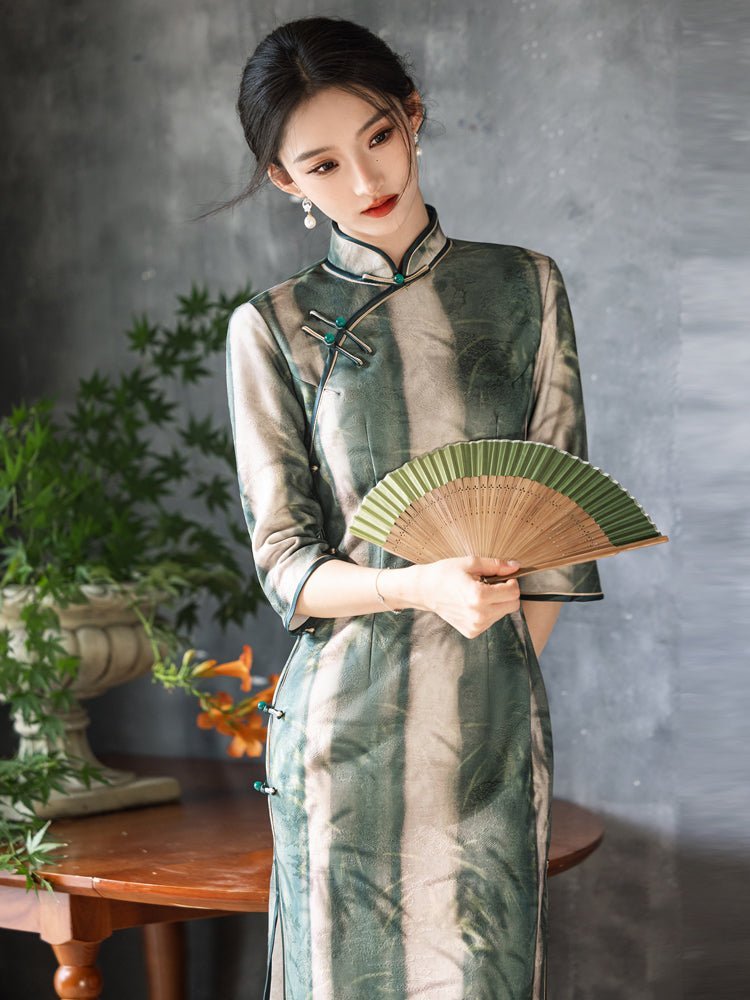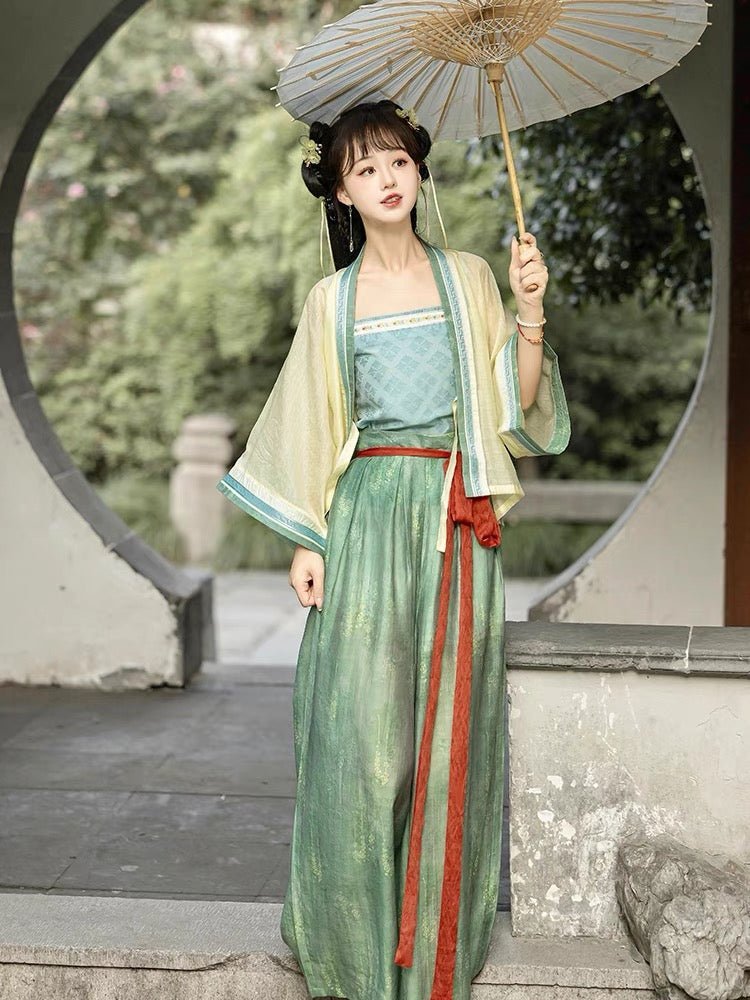

Credit: MIXED UP | Yulan Jack (YouTube)
What is Hanfu?

When you scroll through social media and see Chinese people wearing flowing garments, or spot outfits with Eastern aesthetics at international events, you might wonder: What is Hanfu? It is not simply "ancient clothing" nor is it exclusive to any single dynasty in China. Instead, it is a system of Hanfu clothing for the Han ethnic group that has spanned thousands of years of Chinese history, centered on Huaxia etiquette. As one of the most intuitive visual symbols of Chinese culture, Hanfu and Hanfu clothing both represent the essence of traditional Chinese sartorial art. UNESCO has emphasized that traditional clothing is a "vibrant carrier of cultural diversity," and Hanfu clothing is a vivid embodiment of this concept. Next, we will take you through a comprehensive understanding of Hanfu and Hanfu clothing from their definition, history, characteristics to their modern revival.
The official definition of Hanfu
First, we need to clarify a key point: the "Han" in Hanfu and Hanfu clothing refers to the Han ethnic group, not the Han Dynasty in Chinese history. According to the joint definition by the China Hanfu Culture Research Association and the Center for Folklore Studies at Peking University, Hanfu clothing refers to a clothing system with stable shape specifications formed in the mainstream Han society from the Xia, Shang, and Zhou dynasties to the Ming and Qing dynasties (excluding some special costumes of the Yuan Dynasty and Manchu-style clothing of the Qing Dynasty). This definition is not subjective; it is based on comprehensive research of numerous archaeological discoveries, official historical records (such as Records of the Grand Historian·Book of Rites and History of the Ming Dynasty·Records of Costumes), and the inheritance of Hanfu and Hanfu clothing among folk communities.
The differences between Hanfu, opera costumes, Hanbok, and Kimono
Many foreign friends confuse Hanfu with ancient-style costumes, kimono, or hanbok. Here we make a clear distinction: ancient-style costumes are mostly fictional designs created for plot needs in film and television dramas, lacking strict historical shape basis. In contrast, every detail of Hanfu clothing, such as the collar, cuffs, and garment length, can find corresponding prototypes in ancient books or cultural relics. As for kimono and hanbok, they did absorb some elements of Hanfu during their development (such as the curved hem style of early kimono and the ruqun structure of hanbok), but later formed unique styles by integrating their own cultures. For example, the cross-collar with the right lapel overlapping the left is a core feature of Hanfu clothing, while the collar of kimono is mostly a straight cross. Hanfu mainly uses rope belts for fastening, while hanbok focuses more on the decorative effect of wide belts.
Hanfu’s Evolution Across Eras
Tracing the history of Hanfu, we can see a clear evolutionary context of Hanfu clothing. As early as the Yangshao Culture period in the Neolithic Age, primitive linen clothing appeared, which was the embryonic form of Hanfu. In the pre-Qin period, the basic shape of "top and bottom garment system" was formed, combined with accessories such as "bixi" (a decorative front panel), becoming the basis of ritual Hanfu clothing at that time. During the Qin and Han dynasties, Hanfu gradually matured into a more systematic Hanfu clothing system. Men mainly wore curved-hem and straight-hem robes, while women popularized deep robes and ruqun (a top and skirt set). The clothing style was solemn and elegant, conforming to the atmosphere of the unified dynasty at that time. The Sui and Tang dynasties were the peak period of Hanfu clothing development. Influenced by the open social atmosphere, clothing styles became more diverse. The neckline of women's ruqun in Hanfu clothing could be as low as the chest, with wide and flowing skirts, and there also appeared pibo (a long silk shawl) integrating Western Regions styles. Hanfu in the Song Dynasty tended to be simple and elegant, and beizi (a loose outer coat) became a unisex piece in Hanfu clothing, reflecting the aesthetic taste of literati in the Song Dynasty. On the basis of inheriting the previous dynasties, Hanfu clothing in the Ming Dynasty was further standardized. Costumes such as bufu (official robes with embroidered patches on the chest) and aoqun (a lined jacket and skirt set) became mainstream in Hanfu, with more exquisite detail designs.

▲The picture shows the Quju (a type of traditional Chinese robe with a curved hem) from the Qin and Han dynasties.

▲The picture shows a Tang Dynasty chest-high(Qixiong) ruqun.

▲The picture shows a short beizi from the Song Dynasty.

▲The picture shows the classic combination of Ming Dynasty Bufu Aoqun (Mandarin jacket skirt) + Mamianqun (horse-face skirt).
Although after the transition from the Ming to the Qing Dynasty, the mainstream status of Hanfu was replaced by costumes such as Manchu-style clothing, the core shape and cultural connotation of Hanfu clothing did not disappear. The key reason why Hanfu has been inherited for thousands of years lies in the unchanged core characteristics and profound cultural heritage of Hanfu clothing. The cross-collar with the right lapel overlapping the left is the most prominent symbol of Hanfu clothing—the front pieces cross, with the left lapel pressing the right one, and the neckline is in a "Y" shape. This design not only conforms to ergonomics but also embodies the Huaxia etiquette concept of "right being respected." Loose-fitting robes with wide sleeves in Hanfu reflect the Han ethnic group's pursuit of "elegance and freedom." The wide cuffs are convenient for activities, and at the same time, the swing of the sleeves can show a solemn temperament in ritual occasions. Rope belts instead of buttons are both practical and add a vivid beauty to Hanfu clothing.
Hanfu Hierarchy
In addition to the core shape, Hanfu clothing has a very rich variety, which can be divided into formal wear and daily wear according to scenarios. Formal Hanfu wear, such as mianfu (imperial coronation robes) and zhiyi (queen's ceremonial robes), has complicated craftsmanship and exquisite patterns. It is mostly used in important occasions such as sacrifices, weddings, and enthronements, and is an important carrier of Huaxia etiquette in Hanfu clothing. For example, the twelve imperial symbols (twelve patterns such as the sun, moon, and stars) on mianfu can only be used by emperors, symbolizing the supreme imperial power. Daily Hanfu wear pays more attention to practicality. Such as ruqun, straight-hem robes, and beizi in Hanfu clothing, they are simple and comfortable in style, suitable for daily life, labor, and socializing. In addition, the patterns and colors of Hanfu are full of cultural symbols: dragon and phoenix patterns symbolize nobility, interlocking branch patterns imply continuity, and plum, orchid, bamboo, and chrysanthemum represent the character of a gentleman. In terms of color, bright yellow was the exclusive color of the royal family in Hanfu clothing, while cyan and white were common elegant colors among the people. These all reflect the philosophical thoughts and aesthetic tastes of the Han ethnic group in Hanfu.
The Hanfu Revival
In the 21st century, Hanfu has ushered in a modern revival, and the popularity of Hanfu clothing has been rising globally. In 2003, a folk enthusiast walked on the street wearing self-made Hanfu clothing, which was reported by the media and triggered a nationwide "Hanfu Revival Movement." Early revivalists mostly studied ancient books, restored cultural relics, and made Hanfu by hand, striving to restore the original shape of Hanfu clothing. Today, Hanfu has moved from a niche hobby to the mainstream vision, and Hanfu clothing has become a fashion trend among young people: every year on Huazhao Festival (Flower Festival) and Shangsi Festival, many cities across the country hold Hanfu-themed activities, with hundreds of thousands of enthusiasts gathering in Hanfu clothing to show the beauty of traditional clothing. On social platforms such as Douyin and Xiaohongshu, the playback volume of topics related to "Hanfu" has exceeded 100 billion times, and many young people share Hanfu clothing outfits and cultural knowledge through short videos. More importantly, Hanfu has appeared on the international stage many times—at the opening ceremony of the 2008 Beijing Olympic Games, actors wore costumes with Hanfu clothing elements to show Chinese civilization. At the 2023 Paris Fashion Week, Chinese designers combined Hanfu patterns with modern tailoring to launch a series of Hanfu clothing works that attracted global attention.
According to the 2024 report released by the China Internet Network Information Center, the number of Hanfu enthusiasts in China has exceeded 40 million, and the size of the Hanfu clothing market has exceeded 20 billion yuan. Behind this data is the recognition and love of young people for traditional culture, as well as the embodiment of the vitality of Hanfu culture. It is worth mentioning that the revival of Hanfu clothing is not "retro," but innovation on the basis of inheriting tradition. Today's Hanfu designers integrate modern fabrics and tailoring techniques into Hanfu clothing design, and launch "improved Hanfu" suitable for daily wear, allowing Hanfu clothing to better adapt to modern life scenarios.
In the final analysis, Hanfu is not only a set of clothing but also a "living fossil" of Chinese culture, and Hanfu clothing is the tangible carrier of this cultural heritage. It carries the aesthetic tastes, etiquette norms, and cultural identity of the Han ethnic group for thousands of years, and is one of the spiritual symbols of the Chinese nation. For foreign readers, understanding Hanfu and Hanfu clothing can not only let you see the diversity and profound heritage of Chinese culture but also help you understand China more comprehensively—it is not only a country with a modern look but also an ancient civilization with a long history and splendid culture. The State Cultural Heritage Administration of China has stated that "traditional clothing is an important part of human intangible cultural heritage. Protecting and inheriting Hanfu and Hanfu clothing culture is to protect the diversity of human culture."
If you’re interested in Hanfu, then on your next trip to China, you can focus on visiting cities with a long traditional culture – like Xi’an, Beijing, Luoyang, Kaifeng, and Handan. These cities’ historic sites are full of Hanfu lovers and related businesses. You can also follow the official social media accounts of Jianxi Hanfu to learn more about Hanfu’s history and culture. Feel free to reach out to us on social media to talk about Hanfu