

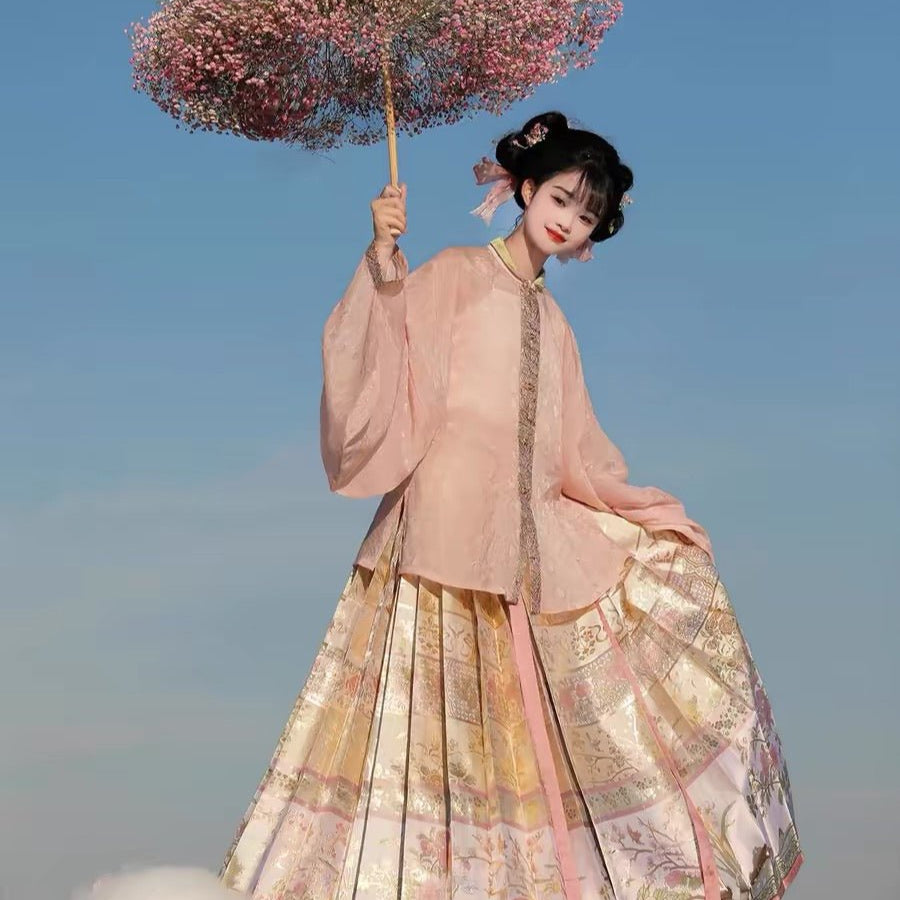
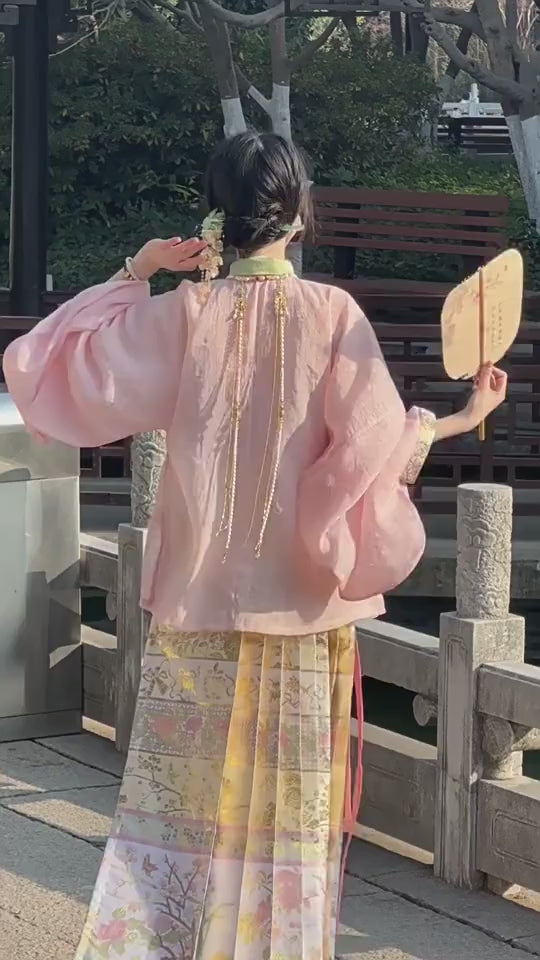
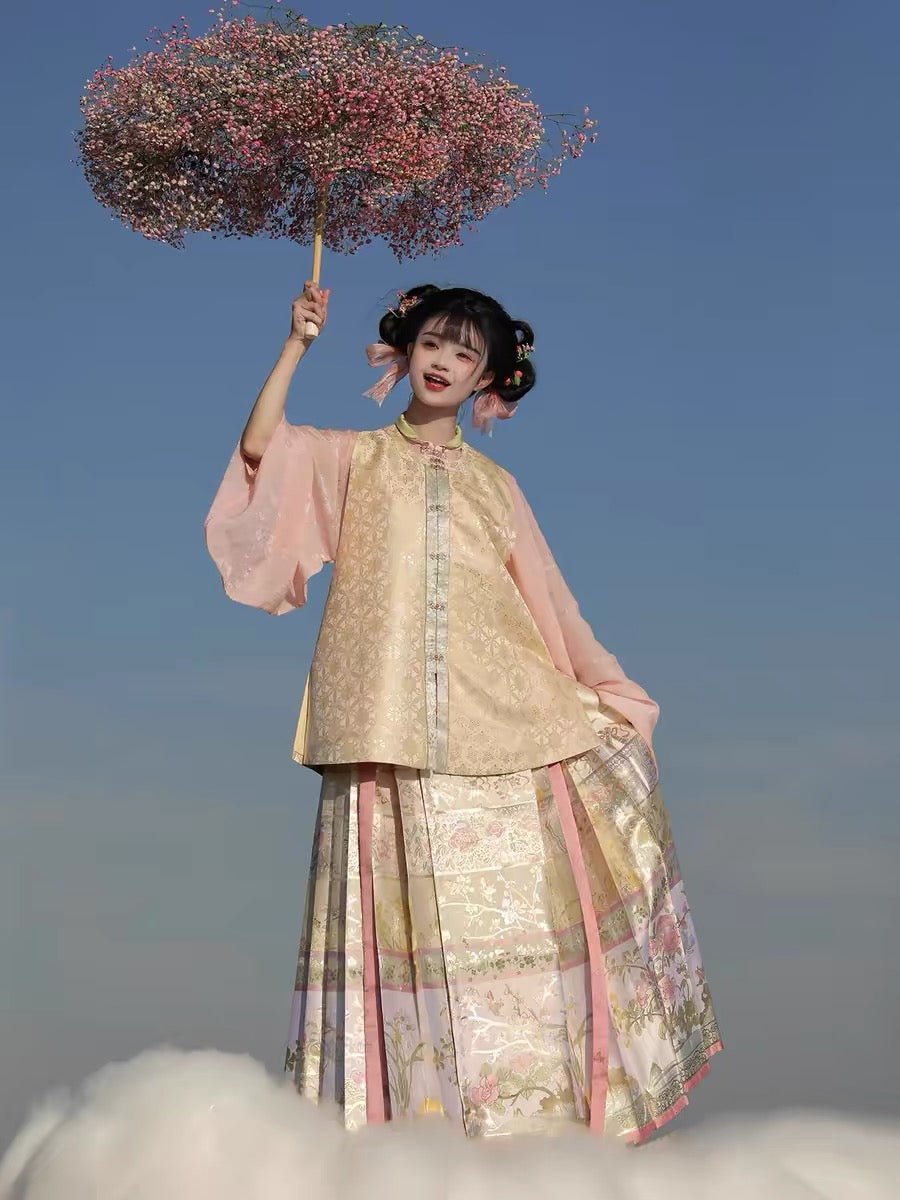
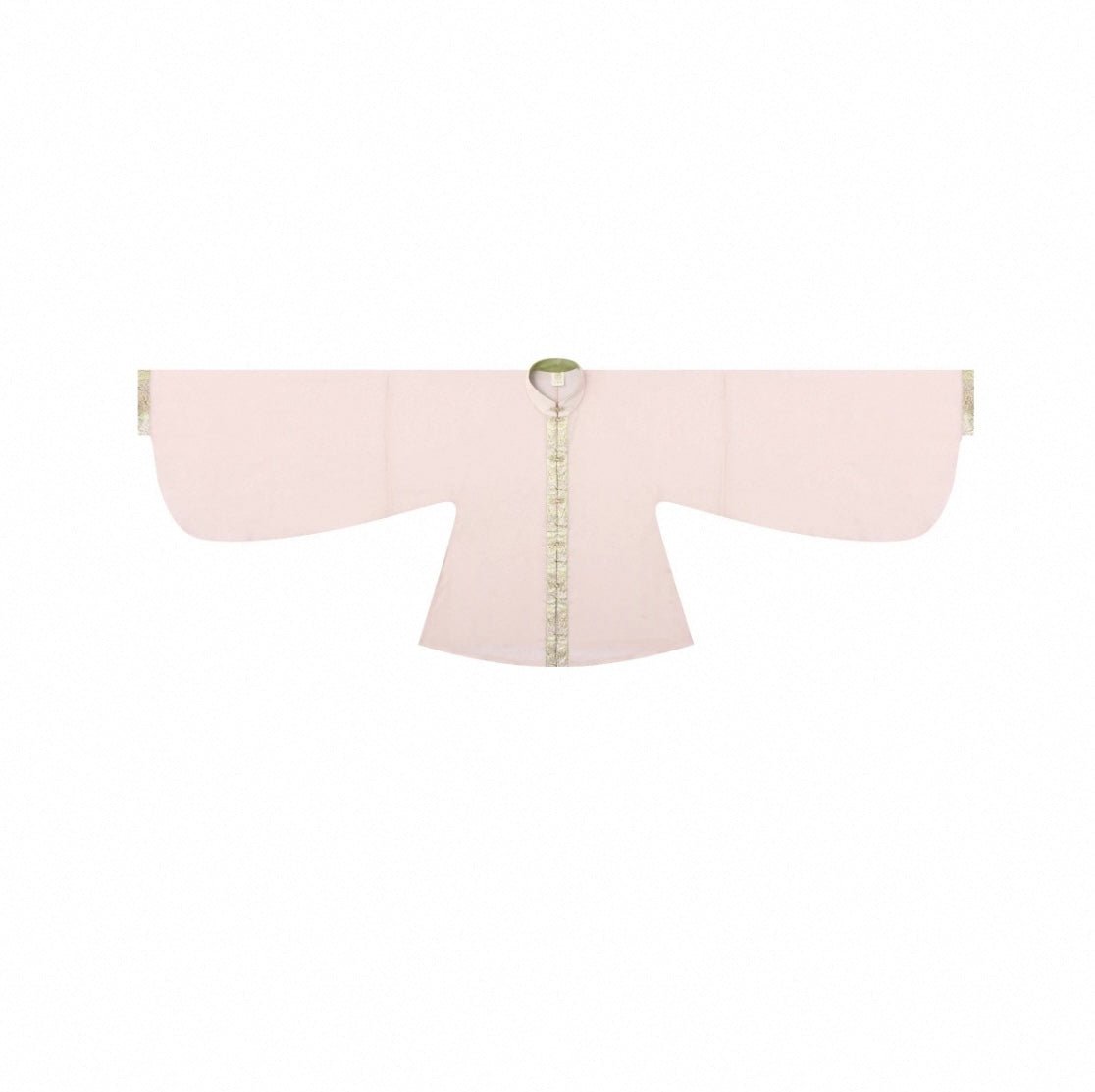


Rosa Duijin-Hemd aus der Ming-Dynastie
Important Notes
Washing
*Hanfu garments are often delicate, especially those with embroidery. Handwashing is recommended.
*If you prefer to use a washing machine, choose the gentlest cycle and place the Hanfu in a laundry bag for added protection.
*After washing, air-dry indoors in a well-ventilated area.Avoid direct sunlight, as it can cause color fading.
Storage
*Store your Hanfu in breathable garment bags to keep it clean and protected.
*Avoid hanging for long periods, as this can stretch or distort the fabric.
*Instead, gently fold your Hanfu and store it flat or stack it neatly in a storage box or drawer.
What to Expect Before Your Order Ships
Processing Time: Orders are typically processed within 3 business days, excluding weekends and holidays.
Readily Available Items: These items are processed and shipped within 3 business days.
Preorder Items: Processing time for preorder items may range from 2 to 5 weeks, as indicated in the product description. Please refer to the estimated timeframe under the product description for an accurate processing duration.
If your order contains both readily available and preorder items and you wish to have them shipped separately, an additional USD 25 will apply. Please contact us to arrange this.
Once your order has been dispatched, we cannot cancel, modify your order.
If there are any issues with your order — such as an item being out of stock or unavailable — we will notify you via email within 48 hours of receiving your order.
If you have any questions or need support, feel free to contact us at jianxihanfu@gmail.com. Please allow 1-2 business days for a reply, as there may be a time zone difference.
International Shipping
Enjoy FREE Standard Delivery on $199USD+ orders! Discount applies automatically.
Shipping Methods
- Express Shipping: Delivered via DHL or FedEx, typically within 5–7 business days. For certain addresses, we may use EMS or UPS at our discretion.
- Standard Shipping: Shipped via China Post and USPS, with an estimated delivery time of 2 weeks.
Order Tracking
Once your order ships, you’ll receive an email confirmation with a tracking number so you can follow your package every step of the way.
- DHL: https://www.dhl.com/en/express/tracking.html
- FedEx: https://www.fedex.com/en-us/tracking.html
- China Post: https://www.17track.net/en
Customs Duties & Taxes
Please note that any customs fees, duties, or taxes imposed by your country are not included. These charges are determined by local customs authorities and are beyond our control.
In the event that customs duties are declined at the time of delivery, the package is returned to us, please note that no refunds or cancellations will be provided. This is due to penalty charges imposed by the courier for the return shipment. We appreciate your understanding that international shipping costs are increasingly expensive and our profit margins are very slim. Therefore, please do not place an order if you are unable to pay the customs duties imposed by your country.
1. 退货政策
a) 本店专营精选限量版商品和传统手工艺品。为确保每位顾客都能收到 100%全新无瑕的商品, 我们无法接受因个人喜好或订购错误(例如尺码或颜色错误)而提出的现金退款申请。 但我们致力于提升您的购物体验,并乐于提供灵活的替代方案,尽力解决您的问题。 我们强烈建议您在购买前仔细查看尺码表或联系客服。
b) 如果您的包裹出现破损、缺陷或明显的制造问题(这种情况极为罕见),请在收到包裹后 3 天内发送电子邮件至 jianxihanfu@gmail.com 。请务必附上您的订单号和清晰的问题照片,以便我们立即为您快速解决问题。
2. Exchange Policy
If your item doesn't fit perfectly, we offer an exchange policy to help you get the right size. Please note that exchanges are only processed after we receive and inspect your returned item.
Eligibility: Items must be returned in their original packaging, unworn, unwashed, and in perfect, resalable condition (free of makeup, perfume, or pet hair).
Timeframe: You must contact us at jianxihanfu@gmail.com within 3 days of receiving the item to request an exchange.
Exchange Process:
Ship the Item Back:Once your exchange request is approved, you must ship the item back to our facility.
Return Shipping Address: Room 403, Building 5, Yard 5, Xingtai Street, Daxing District, Beijing, 102600 China.
Attention: Shelia
Phone: +86 15901358540
注意: 请在发起任何退货或换货之前联系我们。此外,我们强烈建议您使用可追踪的物流服务 ,因为我们无法对丢失的包裹负责。
Inspection: Upon receiving your package, our team will inspect the item to ensure it does not affect secondary sales.
Shipping Your New Item Once the item passes inspection, we will process and ship out your new requested size or style. If the item does not meet our inspection criteria, it will be sent back to you at your expense.
Fees: Customers are fully responsible for all shipping fees and any customs duties associated with both the return of the original item and the shipment of the exchanged item. These fees are non-refundable.
❌ 不可退货及最终销售商品
为保持严格的质量和卫生标准,以下商品严禁退换货 :
定制及量身定制: 根据您的尺寸专门定制的定制、婚纱或个性化商品。
卫生敏感物品: 出于健康和卫生原因,饰品(如耳环、发饰和贴身物品)。
促销及特价商品: 任何标有 “最终销售” 或 “清仓”字样的商品。
免费赠品: 订单中包含的任何促销礼品、赠品或免费商品。
3. Order Cancellation Policy
We process orders quickly to ensure fast delivery. If you need to cancel your order, please note the strict timeframe:
- 时间限制: 取消订单的请求必须在下单后 2 小时 内通过电子邮件发送至 jianxihanfu@gmail.com 。
- 必填信息: 请提供您的订单号、姓名和取消原因。
- 状态: 如果订单已在两小时内处理或发货,则无法取消。获准取消的订单将获得全额退款。
4. 缺货商品处理政策
尽管我们力求库存信息100%准确,但偶尔也会出现因供应商缺货或停产而导致订单提交后商品缺货的情况。如果发生这种情况:
- 通知: 我们将立即通过电子邮件通知您。
- 您的选择: 您可以选择:
用类似或升级的产品替换该产品(我们将为您提供各种选择)。
取消缺货商品,即可获得全额退款。
退款处理: 缺货商品的退款将在 3-5 个工作日内退回到您的原支付方式(信用卡、PayPal 等)。
联系我们
如果您对我们的政策有任何疑问,请随时联系我们。我们竭诚为您服务!邮箱: jianxihanfu@gmail.com
Form und Struktur der Kleidung der Ming-Dynastie: Eine Mischung aus Innovation und Zweckmäßigkeit
Der Hanfu der Frauen der Ming-Dynastie erlebte wichtige strukturelle Fortschritte: Während der Kälte der Kleinen Eiszeit kamen Stehkragen (vertikale Kragen) auf, die mit Metall- oder Knopfschlaufen versehen waren, um den Hals warm zu halten, und wurden zu einem charakteristischen Design. Der Mamianqun (Pferdegesichtsröcke) als zentraler Rockstil hatte überlappende Vorder- und Rückseitenbahnen, die eine „Pferdegesichtsform“ bildeten, mit Seitenfalten für mehr Bewegungsfreiheit und verzierten Saumbändern – so symbolisierte die golddurchwirkte Neun-Drachen-Stickerei auf den Rockbändern des „Hundert-Jungen-Gewands“ von Kaiserin Xiaojing (Dingling-Mausoleum) Adel. Ergänzend dazu wurde die „kreuzförmige“ flache Schnitttechnik beibehalten, mit weiten Ärmeln mit schmalen Manschetten und geschlitzten Säumen mit Zwickeln; die über den Schultern verlaufende Trennlinie auf dem Gewand von Kaiserin Xiaojing erzeugte beispielsweise eine elegante A-Linien-Silhouette.
Kleidungsdekoration der Ming-Dynastie: Integration von Handwerkskunst und Symbolik
Zur Dekoration verwendeten die königlichen Adligen hochwertige Stoffe wie Brokat, Kesi (Seidentapeten) und Zhuanghua Luo (gemusterte Gaze), die mit goldgewebten Stickereien verziert waren, während die Bürgerlichen hauptsächlich Baumwolle trugen, ergänzt durch Zhusi (feine Seide) und Lingluo (Damast-Gaze). Die Muster folgten dem Prinzip „Jedes Muster hat eine Bedeutung“ – Wolkenmotive, ineinandergreifende Zweigmuster gepaart mit Phönixen, Pfauen und Blumen waren üblich; beispielsweise symbolisierte die mit Blumen und Pfauen bestickte gelbe Satindecke (gesammelt im Shandong-Museum) „Wohlstand während der vier Jahreszeiten“. Zu den exklusiven Accessoires gehörten Xiapei (ein dekorativer Schal für Adlige), der ausschließlich kaiserlichen Gemahlinnen vorbehalten war und rangspezifische Muster wie Zhai (Fasan) oder Pfauenmotive aufwies, und „Jinbu“ (ein Anhänger aus Gold, Jade, Perlen und Jadeit), der an der Brust hing, beim Gehen ein klingelndes Geräusch erzeugte und sowohl dekorativen als auch rituellen Zwecken diente.
Ming-Dynastie-Kleidung, rosa Hanfu-Duijin-Hemd
Dieses rosafarbene Duijin - Hemd (mit Öffnung vorne) für Damen aus der Ming-Dynastie mit Stehkragen und Pipa-Ärmeln strahlt sanfte Eleganz aus. Es besteht aus Jacquard-Gaze mit subtilen Mustern, besticht durch klare und zarte Motive sowie eine drapierte und glatte Textur und scheint bei Beleuchtung anmutig zu fließen. Der Stehkragen ist mit Knöpfen aus rosafarbenen Edelsteinen und Metall verziert, während die vordere Knopfleiste und die Manschetten mit speziellem Stoff besetzt sind, was dem blassrosa Obergewand einen Hauch lebendiger Helligkeit verleiht. Da das Duijin -Hemd eher dünn ist, trägt man am besten ein Unterhemd, eine Basisschicht oder andere Hanfu-Kleidung, um die Schönheit des Lagenlooks besser hervorzuheben.
