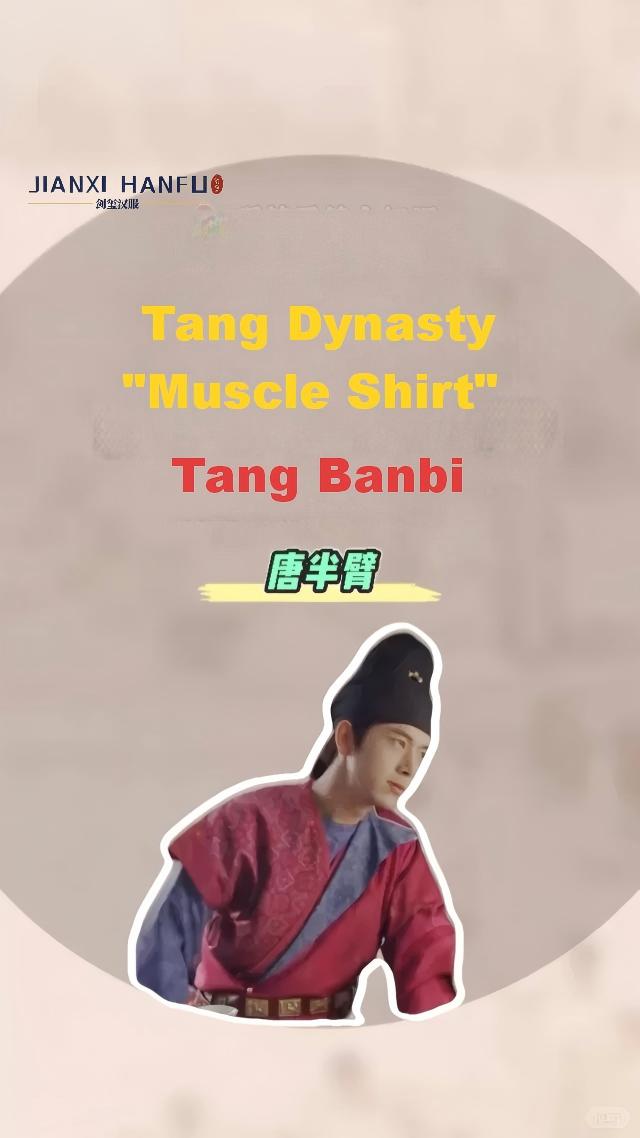

I. Core Structure of Tang Official Costume: Origin & Features of the Round Collar Lan Robe
The daily office attire of officials in the Tang Dynasty centered on the round-necked lan robe — a style finalized during the Zhenguan period (627–649 AD) that epitomized the integration of Central Plains traditions and Hu costume elements. Its key characteristics include:
• Material & Craftsmanship
Basic versions were made of fine linen with subtle patterns; high-ranking officials wore silk and satin (officials above Grade 5 used small-patterned silk, while those below Grade 6 wore interwoven silk-cloth). The collars, cuffs, and hems were trimmed with colored borders, some embroidered with subtle insignias.
• Signature Design
A horizontal brocade band (commonly called "heng lan") was stitched below the knees, symbolizing the ritual tradition of separating upper and lower garments in ancient China. Unlike the commoners' queku robe (split-side for ease of labor), the lan robe had no side slits.
• Fit Details
Featuring a slightly standing collar and narrow straight sleeves, it was worn over a round-necked undergarment — balancing mobility for office work with a sleek, authoritative silhouette.
• Matching Headgear
Officials were required to wear soft-brimmed futou (a type of headscarf made of thin gauze, reinforced with a paulownia wood frame inside), with two soft ribbons hanging at the back — an iconic look of Tang officials.
II. Strict Rank-Based Color System: Hierarchy from Purple to Cyan
The Tang Dynasty established a clear rank identification system through official robe colors. As explicitly recorded in Tang Hui Yao (Compilation of Tang Institutions), the rules were formulated in the 4th year of Zhenguan (630 AD) and refined through subsequent adjustments:
Rank: Grade 3 & Above
Robe Color: Purple
Supplementary Notes: The dye for this Tang Dynasty men's round collar robe was sourced from rare Western Regions shellfish, making production costly and exclusive— hence its status as the highest rank symbol. Emperors occasionally bestowed "Ci Zi" (Granted Purple Robe) on meritorious low-ranking officials, a rare honor documented in historical biographies.

Rank: Grade 4 & 5
Robe Color: Crimson (Vermilion Red)
Supplementary Notes: Dyed from madder roots through multiple labor-intensive immersions. Grade 4 officials wore dark crimson, Grade 5 light crimson— a distinction verified by textile fragments unearthed from Tang-era tombs in Xi’an. The "Ci Fei" (Granted Crimson Robe) system similarly rewarded exceptional service.


Rank: Grade 6 & 7
Robe Color: Green
Supplementary Notes: Grade 6 wore dark green, Grade 7 light green— the Tang Dynasty men's round collar robe for these ranks was typically crafted from tortoise-shell patterned silk, as noted in Tongdian (Comprehensive Canon of Institutions).


Rank: Grade 8 & 9
Robe Color: Cyan/Jade Green
Supplementary Notes: Initially cyan, the color was changed to jade green in 662 AD to avoid visual confusion with purple (a problem cited in Old Book of Tang as "deep cyan resembling purple").


Taboo Regulations: The Tang Dynasty men's round collar robe strictly followed the principle "Higher ranks may wear lower colors; lower ranks shall not usurp higher ones." Commoners were banned from wearing official colors (purple, crimson, green, cyan) under penalty of fines or imprisonment— a rule enforced to preserve social and bureaucratic order.
III. Belt Ornaments: The Second Identity Marker of Tang Dynasty Officials
Tang officials’ "diexie belts" (ornamented sashes) paired with the tang dynasty men's round collar robe served as a secondary rank indicator, with material and buckle quantity regulated by imperial edict (as recorded in New Book of Tang·Records of Etiquette and Apparel):
• Material Hierarchy (top to bottom): Jade (Grade 3+), Gold (Grade 4–5), Silver (Grade 6–7), Toushi (Brass Ore, Grade 8–9) — these materials have been confirmed by archaeological discoveries, including jade and gold belt buckles unearthed from the Tomb of Princess Yongtai.
• Buckle Quantity: Grade 3 and above (13 buckles), Grade 4 (11), Grade 5 (10), Grade 6–9 (9), Commoners (7 brass/iron buckles) — this standard ensured consistency across the bureaucratic system.
IV. Film & TV Restoration References
For visual reference, The Litchi of Chang'an’s Gaofei Film & Television team accurately restored the Tang Dynasty men's round collar robe, incorporating key details: subtle woven patterns, colored silk borders, knee-length "heng lan," and the purple-crimson-green-cyan rank color system. The Longest Day in Chang'an similarly detailed the futou’s wrapping method and internal frame, vividly presenting the complete ensemble of the Tang Dynasty men's round collar robe as supported by historical records and archaeological evidence.
Why not slip into this round-collar robe of Tang Dynasty officials, and journey back with me to the splendid glory of the High Tang from 1,400 years past!