
The broad-shouldered, round-waisted male figures in Lychees from Chang'an are not fictional creations. Tang Dynasty Men's Hanfu images depicted in unearthed pottery figurines and Dunhuang murals all share this robust demeanor. But this imposing physique isn't purely innate – the ancient Chinese had a clever dressing trick hidden in a garment called the "Banbi," a key piece of Tang Dynasty Men's Hanfu that instantly transformed wearers into "muscular men."

△ Unearthed Tang Dynasty horse-training figurine, dressed in Banbi.
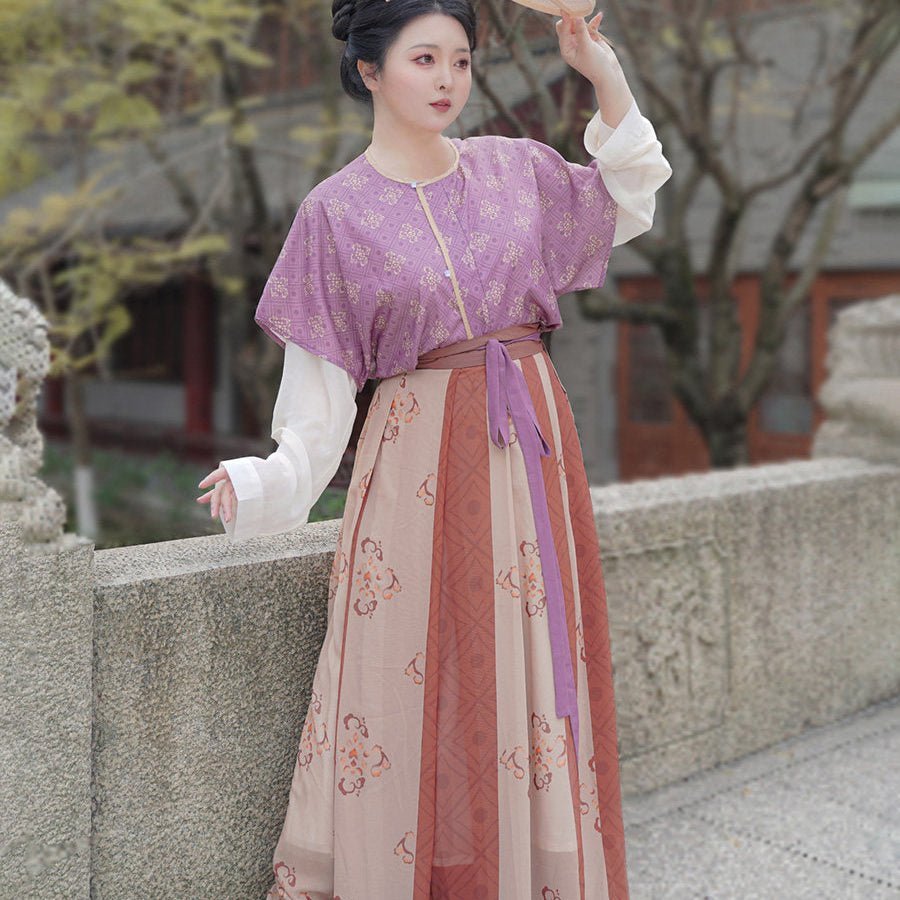
Known also as "half-sleeve" for its sleeves reaching only halfway down the arm, this garment was a popular style in Tang Dynasty Men's Hanfu worn by both genders, yet with distinct differences. Women’s Banbi were form-fitting and waist-length, worn freely over ru skirts or as inner layers, focusing on decorative appeal. In contrast, the men’s version of Tang Dynasty Men's Hanfu was a functional piece bound by etiquette, holding the secret to creating a sturdy silhouette.

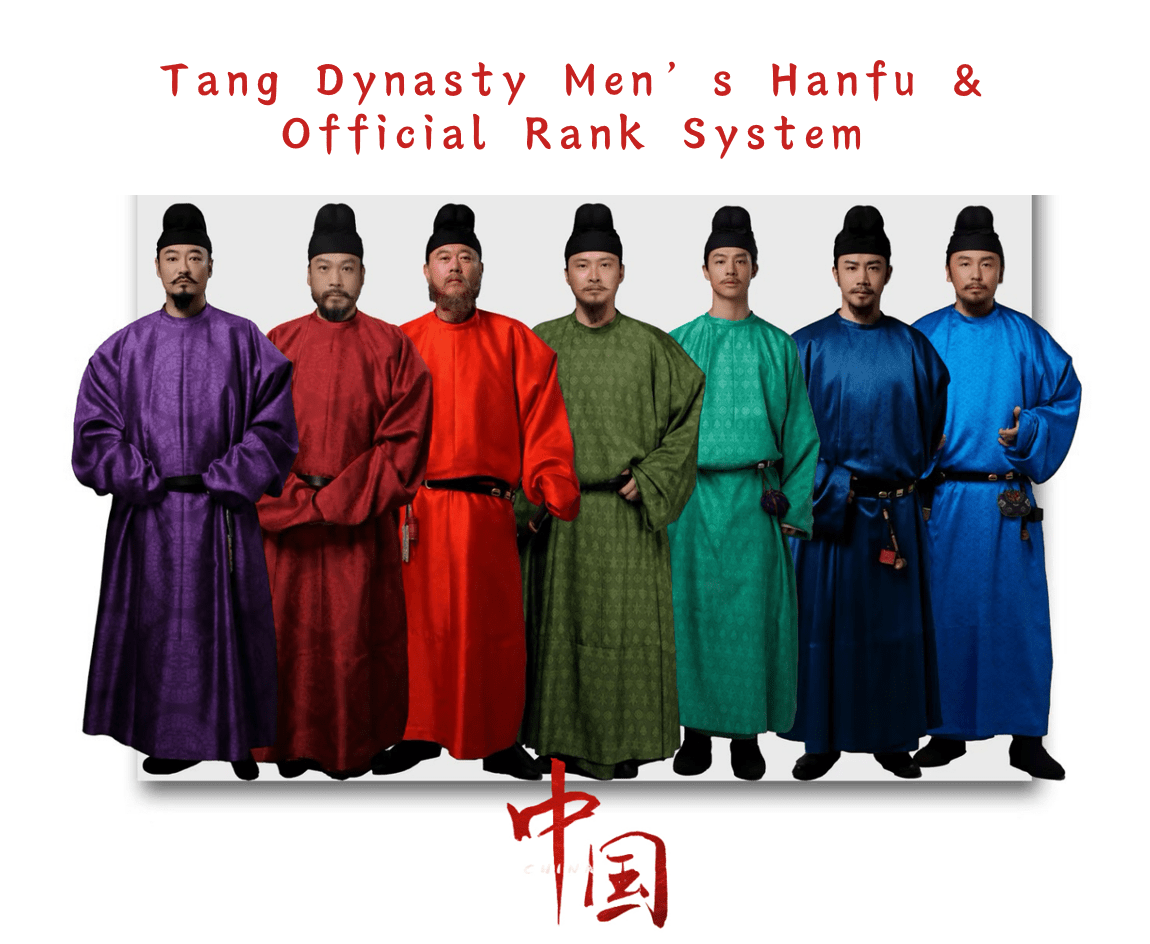
Historical records like New Book of Tang·Records of Etiquette and Apparel strictly regulated the wearing order of Tang Dynasty Men's Hanfu: inner garment first, followed by the Banbi as the middle layer, and an outer robe on top – the only "ritually correct" arrangement. This layered structure is clearly visible in male pottery figurines from Prince Zhanghuai’s Tomb in Xi’an and murals preserved at Shaanxi History Museum, confirming the Banbi’s fixed position in Tang Dynasty Men's Hanfu.

△ Stills from the TV drama Guose Fanghua – Male actors wearing authentic restored Tang Dynasty Men's Hanfu.
The Banbi’s "muscle-enhancing" magic lies in its structural design. As the middle layer of Tang Dynasty Men's Hanfu, its loose shoulder tailoring acts as an invisible shoulder pad beneath the outer robe, subtly broadening the shoulder line. Visually expanded shoulders create a contrast that makes the waist appear slimmer, and when paired with the loose-fitting outer robe of Tang Dynasty Men's Hanfu, it instantly achieves that desired broad-shouldered, robust look. Surprisingly, modern shoulder pad designs have a historical predecessor in this clever element of Tang Dynasty Men's Hanfu, showcasing the forward-thinking wisdom of ancient fashion.
Tang Dynasty Men's Hanfu’s Banbi boasts exquisite craftsmanship in both material and proportion. It features a two-piece structure: the upper part made of thick, stiff brocade for structural support, and the waist panel crafted from lightweight, soft silk or gauze that hugs the waist. Restoration reports from Shaanxi History Museum reveal the cutting ratio of the waist-paneled Banbi aligns closely with the golden ratio (1:0.618) – the overall length to upper garment length equals upper garment length to waist panel length – blending aesthetic beauty with body-sculpting functionality in Tang Dynasty Men's Hanfu.

△ The Tang‑style Banbi’s masterful tailoring and perfect proportions easily create a flattering silhouette of broad shoulders and a narrow waist.
This is no ordinary garment. The Banbi in Tang Dynasty Men's Hanfu is a genuine styling secret from ancient China’s golden age. It turns a regular silhouette broad-shouldered and powerful, blending royal etiquette, timeless golden ratio design, and exquisite craftsmanship into one stunning piece. More than just clothing—it’s a way to carry the majestic spirit of the Tang Dynasty. Wear the Banbi, and you’ll instantly own the heroic, imposing look of ancient Chinese noblemen. This iconic treasure of Tang Dynasty Men's Hanfu is not only a piece of history but also a timeless fashion statement waiting for you to discover and wear.